

Dr. Asya Cooley has been appointed the Don and Cathey Humphreys Chair in the College of Arts and Sciences at Oklahoma State University. The chair is named for Don and Cathey Humphreys, whose giving has made international experience possible for OSU students. Don Humphreys is a Tulsa native and a 1971 graduate of OSU in Industrial Engineering and Management. The couple also supports the Humphreys Long-Term Travel Grant, which funds overseas internships, study abroad and research abroad for OSU students at any level and in any major. For MESA, the appointment is a recognition of the work the group has built with students in the international space. The international focus of the Humphreys gift aligns closely with the global scope of the group's research and with Asya's experience leading international experiences for students.
News
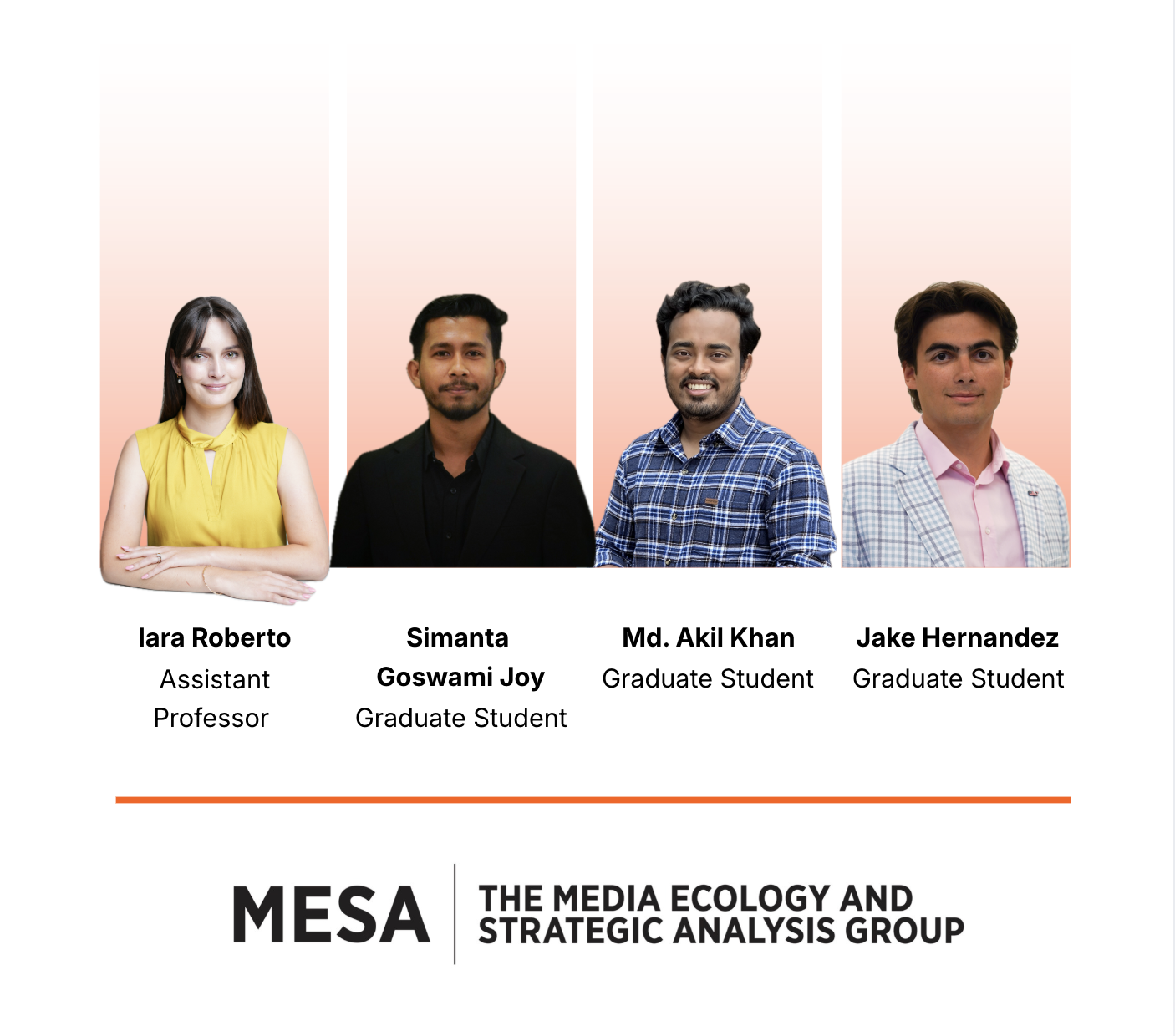
Four new researchers join the MESA Group
We are welcoming four new researchers this fall. They bring experience in broadcast journalism, campaign management, fact-checking and multimedia reporting.
Iara Roberto is an Assistant Professor of Professional Practice. She earned her M.S. in Mass Communication at OSU and her B.A. in Journalism (Broadcasting) and Spanish for Global Competence at The University of Texas at Arlington. She serves as Vice President of the Oklahoma Broadcast Education Association for 2026 to 2027. Iara brings a strong broadcast background and Spanish language skills to the team.

MESA researchers examine ethics in AI-assisted advertising
MESA researchers published a new study titled "On the Creative Battlefield: How Advertising Practitioners View Ethics in the GAI-Assisted Creative Process" in the Journal of Media Ethics. This study explores how advertising practitioners incorporate Generative Artificial Intelligence across the five stages of the creative process and how they navigate the ethical challenges that emerge. Drawing on in-depth interviews with agency and freelance professionals, the research maps the evolving roles of GAI onto a stage-based creative framework and identifies the distinct tensions that arise at each phase.
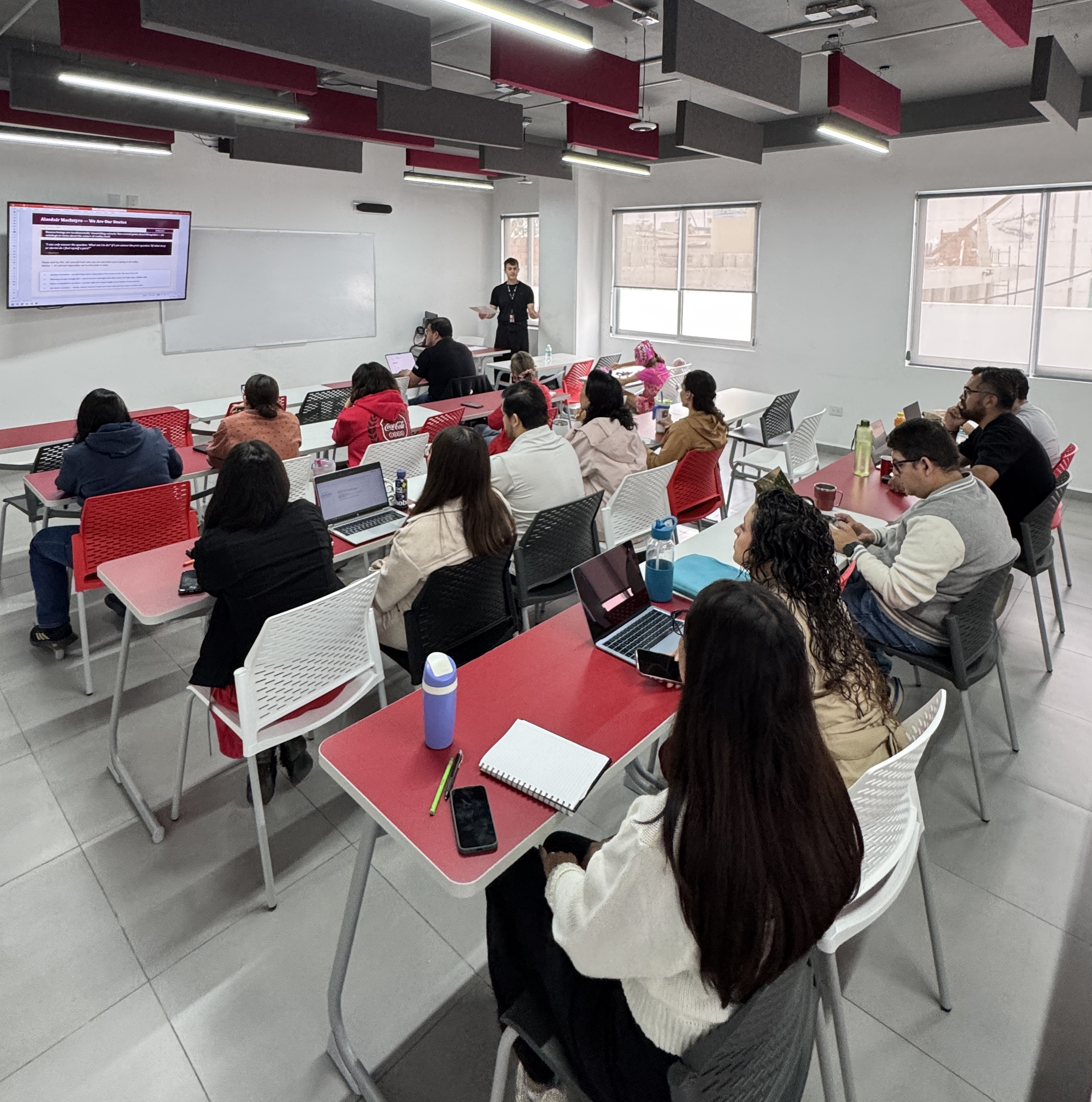
Emotion, archetype, narrative: Skye Cooley's lecture at UPAEP Global Summer
Dr. Skye Cooley delivered a special guest lecture, "The Magic of Storytelling," as part of the UPAEP Global Summer program in Puebla, México. The session introduced participants to a framework connecting emotion, archetype, and narrative in strategic communication. Drawing on the work of philosopher Alasdair MacIntyre, communication scholar Walter Fisher, and psychologist Carl Jung, Dr. Cooley walked students through what he calls "emotional archaeology," a diagnostic tool for analyzing why some brand stories resonate and others fall flat. The lecture extended these foundational theories with insights from predictive processing and affective neuroscience, proposing that emotion functions as the primary mechanism through which people experience and construct reality, occurring before conscious thought takes shape. Students learned to apply a three-question diagnostic, examining a narrative's structure, its underlying archetype, and the emotion it generates, as a practical tool for building and evaluating brand stories.
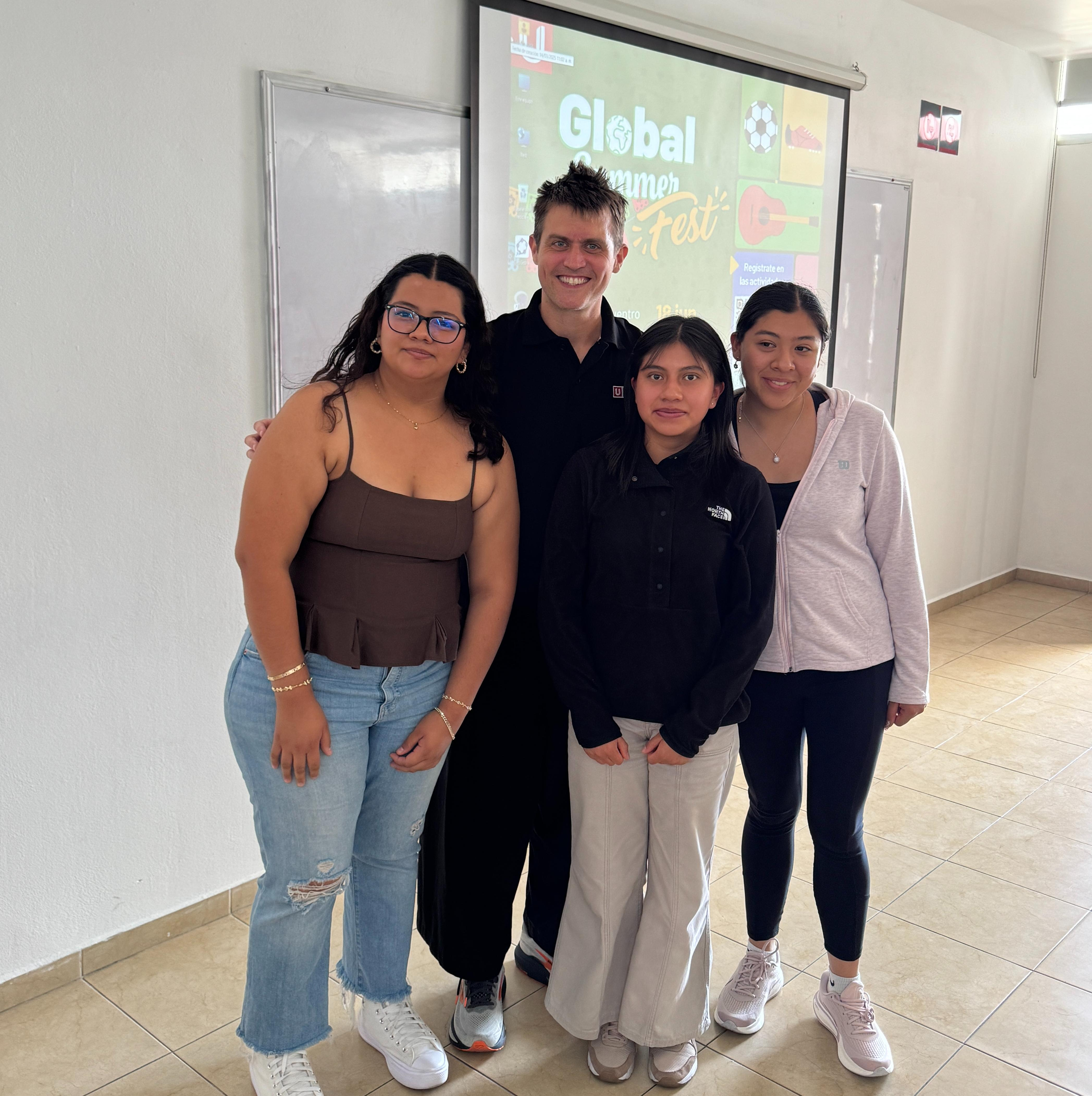
Information as weapon: Skye Cooley's UPAEP lecture on Russian strategic communication
Dr. Skye Cooley delivered an invited lecture at UPAEP's Global Summer program in Puebla, Mexico, on Russian gray zone warfare and the role of strategic communication in modern conflict. Drawing on MESA's ongoing research analyzing foreign media narratives for U.S. defense and homeland security partners, the talk traced how the Kremlin built its information apparatus over the past two decades and outlined the core tactics of contemporary gray zone operations, including coordinated inauthentic behavior, narrative inversion, and the "firehose of falsehood."
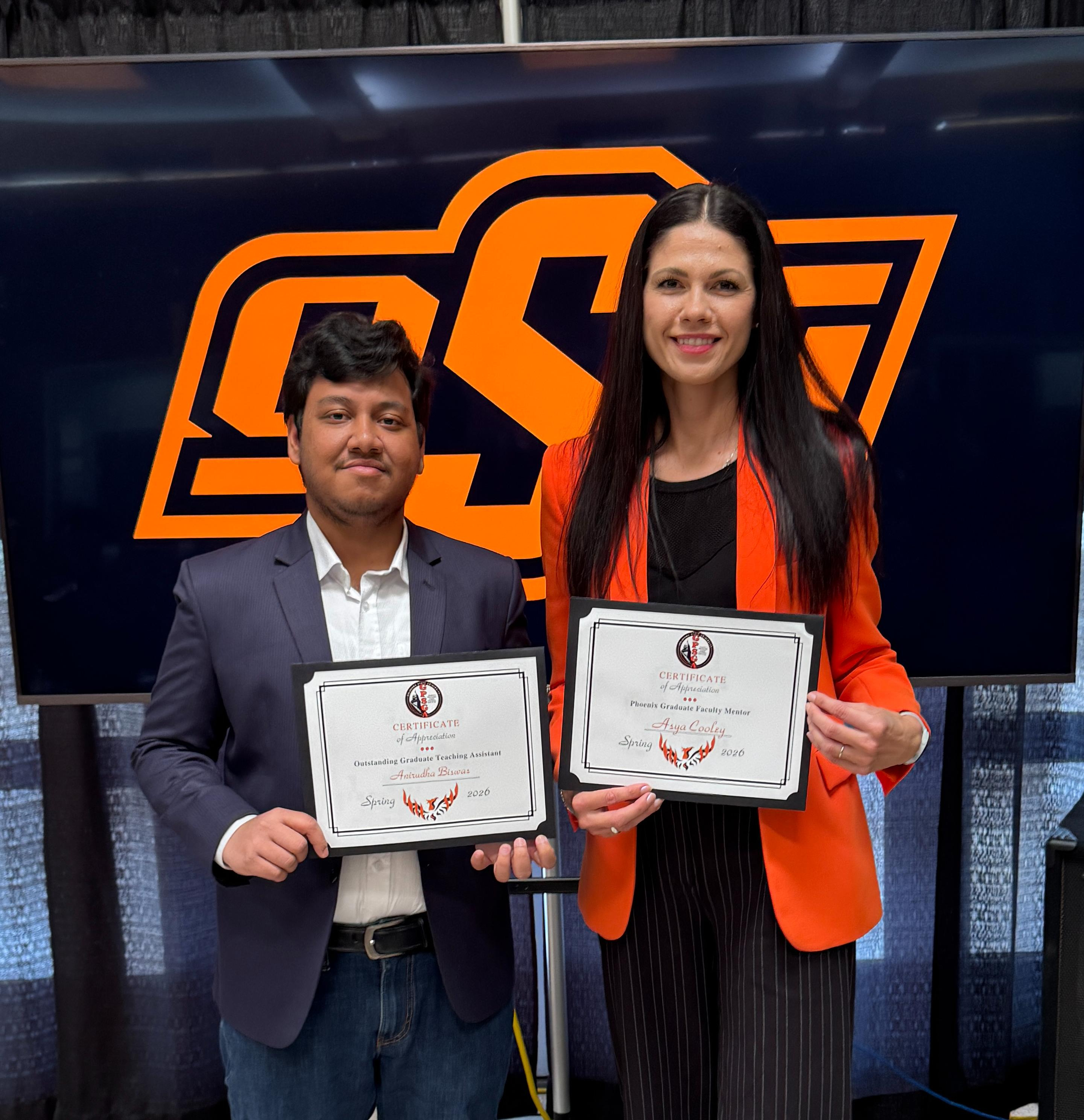
Two MESA members recognized at OSU Graduate College Awards Ceremony
The MESA Group is proud to celebrate two members recognized at the Oklahoma State University Graduate College Awards Ceremony this spring. Anirudha Biswas received the GPSGA Graduate Teaching Assistant Phoenix Award, which recognizes an outstanding graduate teaching assistant each academic year for their dedication to teaching excellence and contributions to the graduate education community at OSU. Ani's recognition reflects his exceptional work in the classroom and his commitment to the students he serves.
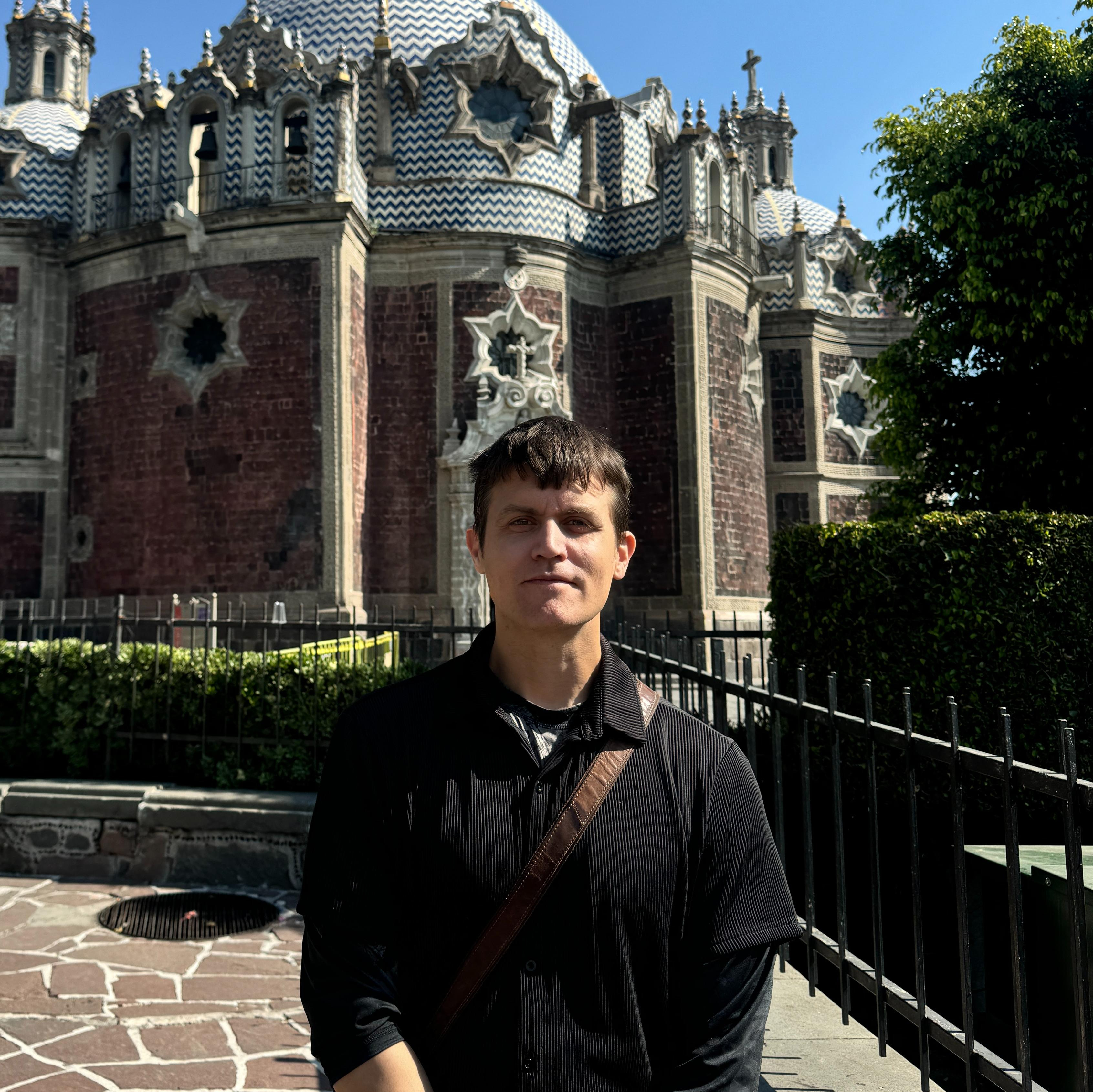
UPAEP Global Summer selects Dr. Skye Cooley as International Faculty
Dr. Skye Cooley has been selected for the UPAEP Global Summer 2026 program. This selection reflects Dr. Cooley's commitment to Oklahoma State University's Mexico initiatives since the OSU Mexico Office began operations, including his leadership of the Media Literacy training grant for Mexican media and communications students and professionals, sponsored by the U.S. Embassy in Mexico City.

New policy brief: Russia's evolving strategic deterrence doctrine
MESA Group researchers have published a new policy brief in the Russland-Analysen titled "Understanding Russia's Strategic Deterrence: Development, Culture, and Political Significance." Drawing on the analysis of 250 Russian military documents spanning seven decades, the piece traces how Russian military thinking on nuclear deterrence has evolved through seven distinct phases — from initial nuclear acquisition in the 1950s through today's hybrid strategic deterrence model. The brief explains how Russia's strategic culture, shaped by a deep sense of vulnerability alongside an insistence on great power status, has produced a conception of deterrence that is fundamentally different from Western frameworks.

Cooley and McCoy challenge conventional views on emotion's role in generating conscious experience
MESA Research Group is pleased to highlight new research from Dr. Skye C. Cooley and Jonathan McCoy, titled "Emotion as Constitutive of Consciousness: A Predictive Processing Framework for Autonomous Experience." This paper offers a bold reconceptualization of emotion's role in consciousness, arguing that rather than simply responding to reality, emotion actively generates the experiential world through predictive processing. Drawing on Karl Friston's Free Energy Principle and Lisa Feldman Barrett's constructed emotion theory, the authors demonstrate that affective states function as a primordial prediction layer — shaping embodied meaning before conceptual thought emerges.